A Tale of Two Swords

The following is an article I wrote for the FaithWriters weekly challenge. The topic was “The pen is mightier than the sword”.

“Ho there! Good Abbot!” The knight thumped on the monastery door. The night closed in rapidly around him and his breath blew fog-like on the chill air. He had not long to wait before a humble monk opened the door and bowed respectfully to his visitor. “Greetings, friend,” the knight nodded wearily. “I am lately returned from the wars and I seek a night’s respite for me and my men.”

“I bid thee welcome in the name of our Lord, Sir Knight,” the monk allowed the band of foot-sore soldiers to pass.

They were shown where they might refresh themselves while the monk went in search of the abbot just come from Vespers. Soon enough they were seated at table and given a hearty meal to sate their growling stomachs.

“Doest thou have far to travel, Sir?” A monk sat down beside the knight and proceeded to dip bread into his pottage.

“Many leagues yet afore I see my beloved home.”

“And the wars? How didst thou fare?”

The knight set down his tankard and grinned. “Aye, but I have news to tell.”

“Say on then, Sir. I would fain put it to ink.”

“A scribe, are ye?”

“That I am. And there is none better occupation.”

The knight offered a scornful laugh. “How so? Thou see not the world as I, nor the glory of battle.”

The scribe chuckled. “Aye, but I copy the Holy Scriptures. Such knowledge, such wisdom and beauty thou mayest never read.”

“What care I for that, when I see God’s creation before me as I ride? Can words compare with the feel of God’s strength in my arm as I slay the infidel?”

“Aye, but the Scriptures are like a sword themselves, dividing soul and spirit, forging change in the very heart of a man. Words are a powerful weapon, my friend.”

The knight remained doubtful.

“Very well,” the scribe sighed in seeming resignation. “Tell me how many men thou hast killed? Tell me of thy fiercest battle.”

Thus, the knight told his tale to the scribe in colourful detail. He told how without reck or rein he forged into the battle lines and slew fifty men without injury to himself, and then escaped in no less than an artful manner.
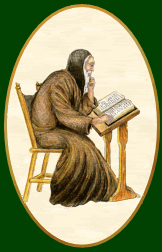
The scribe listened carefully and when the story was told, he smiled with a twinkle in his eye. He rose from the board and inclined his head to the knight. “An heroic tale, I admit. I would hear more of thy victories, yet the hour grows late. Come and see me on the morrow, good knight. I shall have something for thee.”

The following morning, as petitioned, the knight sought his monkish friend, who appeared as though he had not slept. “I give thee good morrow, Scribe.” He slapped him on the shoulder.

In spite of his yawning mouth, the monk grinned his greeting. “May God bless thy day, Sir.”

“Well, then,” the impatient warrior said, “what is it thou hast for me?”

The scribe reached inside his robe and pulled out a scroll of parchment. “Read this, my friend.”

With a suspicious eye, the knight opened the scroll and read the contents with a frown. As his eyes scanned the words, they widened, narrowed and widened again, until he finally looked up at the scribe in astonishment. 

“Why, this is the very tale I accounted to thee yester-eve.”

“Aye.” The scribe nodded.

“And yet, thou hast written that I defeated an hundred men single-handed, and made it sound truthful at that.”

“Aye,” the scribe said again and laughed. “And who wouldst doubt what is writ in ink? Now doest thou see why there is none better occupation than a scribe? I can make the impossible seem possible. I can inspire greatness in men. In truth, I can do more with thy sword, through my quill, than thou canst do in living. And the Holy Scripture is even greater than aught I can scratch on a parchment.”

The knight stared at him for a moment and then bellowed in laughter. “I grant thee the victory, my friend. I hear thy charge.” He bowed good-humouredly. “Thy quill is mightier than my sword.”

 For the word of God is living and active. Sharper than any double-edged sword, it penetrates even to dividing soul and spirit, joints and marrow; it judges the thoughts and attitudes of the heart. Hebrews 4:12 [NIV]

 © 2010 Amanda Deed

Published in: on 13th August, 2010 at 11:09 am  Comments (4)  
Tags: , , ,

Describing Sound

As a writer, sometimes I am inspired by the smallest things. A few weeks ago, I was siting in church in our Cambodian service, listening to the sermon and the translation which followed each phrase. Alright, so maybe I wasn’t paying full attention, as you will discover by the following paragraphs, but hey, don’t we all find our minds wandering at times?

I love watching the translator work. He is brilliant at not only translating the message, but mimicking the speaker’s hand gestures as well. But, as I listened to him, I began to consider how I would describe the Cambodian language, Khmer, to someone who hadn’t heard it before. Here’s what I came up with:

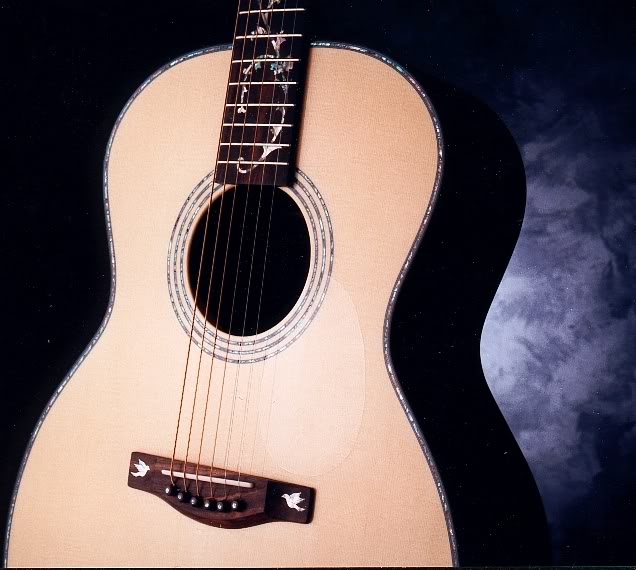
The closest thing I can relate the sound of the Khmer language to is the strumming of an accoustic guitar. Many of their sounds come from way back in the mouth, like the thrum, thrum on the strings. Not in a melodious way, but more percussive in tone. Other sounds are more like a staccato-like plucking of the strings. They have that twang in them.

Knowing that I think like this, I wonder how other nationalities would describe the sound of the English language. I know I’ve heard other languages that sound like whining to me, or like someone with a bad throat.

I would love to hear your description of a language foreign to you, or even just a unique sound you would like to describe in a colourful way.

Published in: on 6th August, 2010 at 11:12 am  Comments (5)  
Tags:

Colours of a Black Day

The following is an article I wrote in November, 2009, for the FaithWriters Writing Challenge, and won first place in the Advanced level.

Golden sunshine heralded a new summer’s day, one seemingly like any other. And yet, perhaps the yellow sun served a warning, much like an amber traffic light, that danger lay ahead. In the aftermath, many recall feeling ill at ease, even from the early morn when the sky still remained clear and bright.

The children laughed and played in the swimming pool. The blue lining gave the water a refreshing and inviting hue. It was too hot to be anywhere else, unless you had air-conditioning. Gazing at the back yard, I felt disquieted by our surroundings—the dull yellow of dry grass and the brown-tipped leaves of sunburnt plants. It was too hot and too dry.

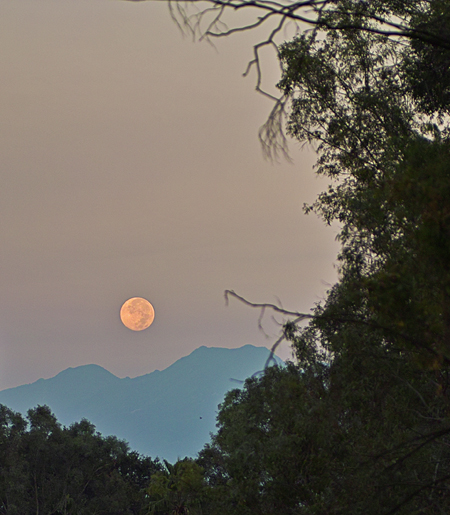
A gusty wind rose in the early afternoon. The sky grew hazy as smoke rolled in from faraway bush fires. The azure heavens were tarnished by a greyish-yellow cloud. The sun seemed to hang heavily in the sky, now a huge orange ball which seemed to glare angrily down at us. The unease grew. It was way too hot, dangerously dry and far too windy.

I opened the front door, or rather, the wind forced it open. As I stepped out onto the front veranda, it shocked me to see a pillar of thick, grey smoke billowing from somewhere behind the red and orange-tiled rooftops before me. I shuddered in fright to think this could happen so close to home, in the middle of suburbia. We are not even in a fire zone.

 “That’s a house going up!” I cried, voicing my fears.

“Nah,” my hubby replied calmly. “It’s just the grass reserve behind the houses.”

But it was a house. Six houses actually. The wind caught the grass fire in a fierce gust and quickly drove it, relentlessly, towards the nearest homes. A raging, red wall of fire devoured the buildings in minutes, with barely any warning. The valiant firemen in their yellow uniforms did not have a chance to save them.

Black. The news began to filter through that night from all over the state. There were images of bright, orange flames engulfing the white trunks of gum trees and the dry, brown underbrush. We saw pictures of thick, black smoke, blocking out the sunlight. We gasped at the tales of whole mountain-dwelling communities, lost to the ravenous blaze in a horribly short space of time. Our hearts despaired at the vision of white, grief-stricken faces, still in shock. And then there were the stories of death—so many deaths—too many senseless deaths.

The black images on our screens infected our very souls with their dark and painful imprint. We cried. We cried for days. Bleak, grey hopelessness.

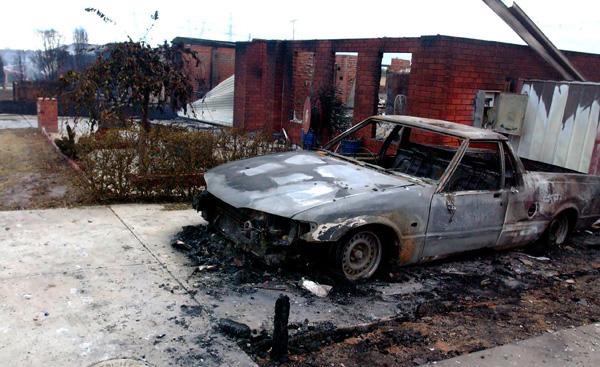
I drove past those houses in my neighbourhood the day after the inferno. There they stood; six black and brown carcasses of what were once happy homes. The cherry-red fire-trucks stood out in stark contrast against the burnt out remains.

But then…the people of Victoria rose up. Rows of green tents were erected on a football field to house families who’d lost everything. Ladies with pink lippy and compassionate smiles prepared food and handed it out. The Red Cross started to raise money to help the fire victims. Even my children gave up toys and clothes to help those in need. The bright, white light of hope found its voice again.

And now, almost a year later, the green is reappearing on the trees. Flowers bloom in pink, yellow, lilac and all the other colours of the rainbow. Life sprouts anew. Communities are physically being rebuilt, although stronger in spirit than before.  They all survived that day; a day filled with many colours, and yet it is known as Black Saturday.

© 2009 Amanda Deed

Published in: on 28th July, 2010 at 11:20 pm  Comments (2)  
Tags: , ,