On This Day …

Thursday, 10th November, 1791
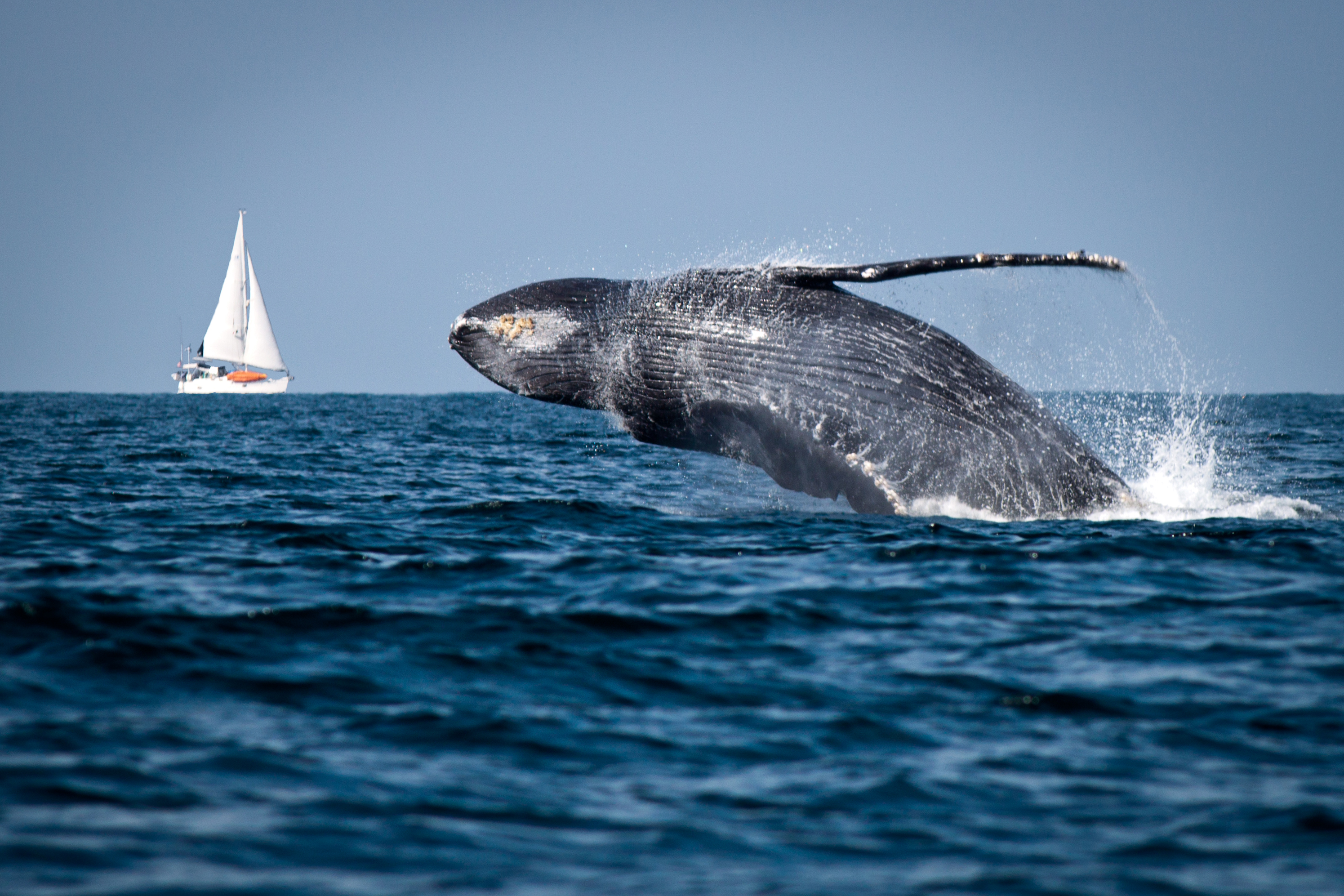
This is another one of the sadder days in our history. According to NSW State records, this is the day the whaling industry began — an industry which in fifty years, had almost wiped out our population of Southern Right Whales.

Back in England, Samuel Enderby of Enderby & Sons, a whaling and sealing company, had heard of an enormous population of whales in southern waters. So of course, he did what any enterprising businessman would do — he sent several of his whaling vessels, including the Britannia and the William and Ann, to  Australia with the Third Fleet.

These ships arrived in Port Jackson between August and October of 1791. Then, Captain Thomas Melville of the William and Ann, and Captain Eber Bunker of the Britannia, sailed out of Sydney Cove on 10th November. Enthusiastic for success, they travelled to New Zealand waters where they undertook their first whale hunt. Both ships returned to Sydney with one whale each and processed them for whale oil on shore.

So began, for them, a successful whaling business. Unfortunately for the whales it meant endangerment in the near future. In some parts of the world the fight to stop whaling still goes on.

Have you ever seen a whale up close? Tell us about your experience.

Published in: on 9th November, 2012 at 10:50 am  Leave a Comment  
Tags: ,

On This Day …

Monday, 2nd November, 1903

Did you know that before 1903 it was illegal to swim at the beach in daylight hours in Australia? Well, particularly in Manly (Sydney), I find. But it seems to follow the current moral trend of the time.

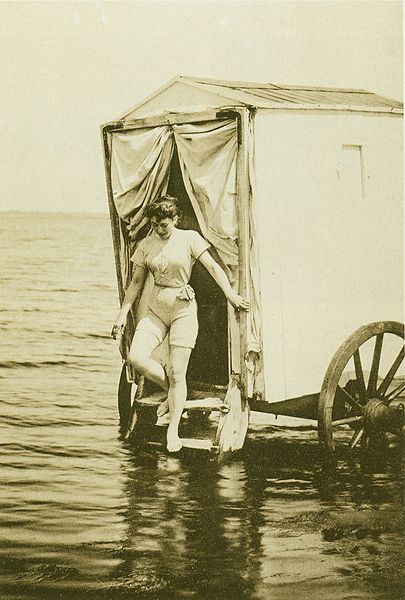
Bathing machine 1893

Public swimming on the beaches was banned completely in the 1830s. Those naughty soldiers were always so hot in their uniforms that by the end of the day, they would just strip down naked and jump into the ocean. As you can imagine, that was unacceptable for society at that time, so the governing bodies clamped down on this behaviour.

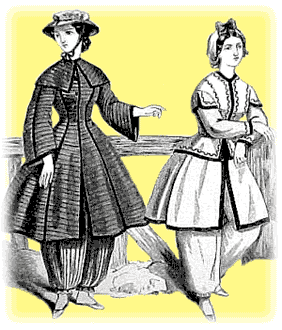
As time went on, people could use bathing machines — a kind of tent on wheels which was rolled into the ocean. Women could slip inside to change in and out of their bathing costume and have their swim in modesty. Of course, bathing costumes in that era would have made swimming, particularly in the ocean, quite dangerous. All those layers of material would be so heavy once filled with water — I can imagine the downward pull that would have in the water.

Swimming costumes in 1864

In 1902, William Henry Gocher, who ran the local paper in Manly, declared his intention to swim in daylight hours on the 2nd of October, in a newspaper article, defying the current laws. He followed through with his threat, though it was not until the third time he dipped in the ocean that he was finally arrested. However, he was never charged.

It took another year of campaigning for the right to swim before the Manly council revoked the law and on 2nd November, 1903, daylight swimming was allowed. There were some tight rules still applied, however. Costumes had to be neck to knee and women and men swam at different times. But these things did slowly change over the years.

Can you imagine if it was still illegal to swim at the beach? Would you obey, or sneak off to a secluded beach somewhere and go for a dip anyway?

Published in: on 2nd November, 2012 at 10:50 am  Leave a Comment  
Tags: , , ,

On This Day …

Wednesday 27th October, 1841

A very interesting part of South Australia’s history, and one which I would like to involve in one of my novels some day … unless another writer beats me to it, of course.

Photo by Zsuzsanna Kilian

The persecution of Lutherans in Prussia, which is now part of Germany, forced many troubled believers to emigrate to Australia and other countries. King Frederick William III had tried to unite the Reformed Churches and the Lutherans and had created a common liturgical agenda for everyone to use. Unfortunately the Lutherans saw it as a compromise to their faith, particularly in reference to the Lord’s Supper.

Needless to say, those devout in their beliefs continued to worship the way they felt compelled to, thus raising the ire of the governing officials against them, and soon enough pastors were being imprisoned for their dissent.

And so began an exodus of Lutheran believers to other nations. The first shipload arrived in South Australian waters in 1838, and on this date in 1841 one of the last boatloads of immigrants arrived. King Frederick died in 1840 and after that the persecution against Lutherans diminished.

However, over those few years, hundreds of Germans settled in South Australia in towns such as Klemzig and Lobethal, adding much to the cultural history of their region.

 Have you ever been persecuted for anything? Can you imagine it being enough to make you move to another country?

Published in: on 26th October, 2012 at 10:08 am  Comments (2)  
Tags: , ,

On This Day …

12th October, 1918

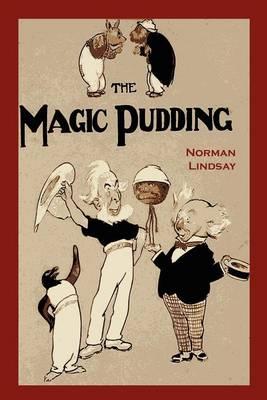
One of Australia’s children’s classics was born on this day. The Magic Pudding, written by Norman Lindsay, was first published. Although it is almost 100 years later, this book is still in print and popular amongst children.

Lindsay originally wrote this book, partly to settle an argument with a friend. His friend believed that children only wanted to read about fairies, but Lindsay thought they wanted to read about food. I guess he won the argument in this case, even though we know kids still love fairies.

The story was about the adventures of three friends — Bunyip Bluegum, Bill Barnacle and Sam Sawnoff — and their magic pudding called Albert. Albert might be a magic pudding, which can never be eaten up, but he has a bad attitude all the same. The three friends must defend against losing Albert to the pudding thieves several times, before they decide to settle in a tree house, away from the dangers of travelling.

In 2000, a movie was made, although apparently quite deviated from the book and didn’t do so well — even with stars like John Cleese, Hugo Weaving, Geoffrey Rush and Sam Neill voicing over the lead roles.

Norman Lindsay was a very creative man. He painted, sculpted and wrote prolifically, although early on his work seemed to strike up some controversy. He only ever wrote two children’s books, however, and The Magic Pudding is probably his best known work of all.

Do you remember reading this classic as a child? Do you still have a copy in your house?

Published in: on 12th October, 2012 at 11:18 am  Comments (1)  
Tags: , ,

On This Day …

5th October 1789

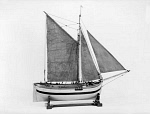
This is what a well-built hoy might have looked like.

Less than two years after Australia was first colonised, our first ferry was launched. At first the government discouraged any large boats from being built, due to convicts who liked to try to escape. But, with the settlement of Rose Hill (now Parramatta), it quickly became a necessity.

In those early days, the bush tracks were still rather dangerous with the chance of attack by the natives, so travel by river made the journey much safer. Thus, the Rose Hill Packet was built and launched.

This boat, a hoy — a small one-masted vessel resembling a barge — was approximately 38ft in length and could carry thirty passengers. However, those passengers most likely had to aid in the rowing to get to their destination.

Image by J Bar – Parramatta River

Because of limited tools and inferior timber, the Rose Hill Packet was not much more than a flat hunk of wood, and soon earned the nickname ‘The Lump’. Nevertheless, it managed to cart passengers and cargo up and down the Parramatta River in at least four days, round trip, and it remained in service for eleven years before been replaced with better built vessels.

If you had to travel from Sydney to Parramatta in 1789, would you have risked the bush tracks and the aboriginals, or would you have braved the waters on a rough-hewn vessel known as ‘the lump’?

Published in: on 5th October, 2012 at 10:56 am  Comments (2)  
Tags: , , ,

On This Day …

Friday 28th September, 1973

Photo by Jacqueline Yong

Although this is somewhat recent history, it is important to Australia none-the-less. Today is the anniversary of the first public performance to be played at the Sydney Opera House. The Australian Opera performed Prokofiev’s War and Peace. The Sydney Opera House is now a tourist attraction for people from all over the world, with its unique architecture.

But, did you know there was another Sydney Opera House before this? The first theatre opened in a warehouse on the corner of York and King Streets in 1879, a popular house for comic opera and vaudeville. This Sydney Opera House had a relatively short life and was closed in 1900.

Fort Macquarie

It wasn’t until 1947 that the need for a new Opera House was realised. Then, it took until 1954 before a committee was formed. In 1955, the site at Bennelong Point (formerly the site of Fort Macquarie, built during Lachlan Macquarie’s time as governor in 1821) was chosen, and the year after that an international competition was opened for designs for the new opera house.

Jørn Utzon’s drawings won the competition and building finally began in 1959. But it wasn’t until 1973, after difficulties in funding each stage, that the theatre was finally completed and ready to be filled with the strains of sweet music.

Have you ever been to the Sydney Opera House? Been inside? Heard music played there? Let us know your experiences.

Published in: on 28th September, 2012 at 3:47 pm  Leave a Comment  
Tags: , ,

On This Day …

Thursday, 22nd September, 1831

Photo by Liahna Reyes

The early 1800s must have been such an exciting time in Australia — even if living might have been difficult in some areas. There was so much new territory to explore, new sights to see, new creatures to discover. What an adventure! I suppose if I had lived back then, I might have been an explorer – except that they probably would have told a woman to stay home and raise babies, etc.

But, I digress. In September 1831, George Fletcher Moore, a settler in Western Australia, was with an expedition led by fellow explorer Robert Dale. The team’s mission was to survey and cut a road in the southwest region of the state to where Moore’s land grant had been awarded.

Scanned image of Moore’s drawing of the numbat.

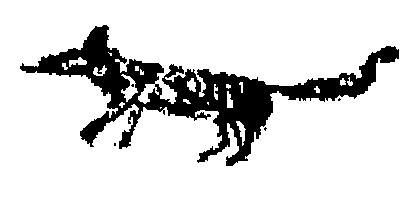
On this happy Thursday, he came across a numbat, although he didn’t know what he was looking at, at the time. After capturing one, he recorded his impressions. ‘From the length of its tongue, and other circumstances, we conjecture that it is an ant-eater—its colour yellowish, barred with black and white streaks across the hinder part of the back; its length about twelve inches.’ He illustrated his description with the first known drawing of the animal.

I wonder what it felt like to discover something new. If your name went down in history as the discoverer of something, what would you wish it to be?

Published in: on 21st September, 2012 at 10:46 am  Comments (4)  
Tags: , ,

On This Day …

Sunday, September 15, 1895

Photo portrait of Mark Twain, 1907, by A.F. Bradley

Being a writer and book lover, I had to share this piece of Australian history. This was the day when Mark Twain, the writer of classics such as Huckleberry Fin, Tom Sawyer and The Prince and the Pauper, arrived in Australia for a lecture tour at the age of sixty.

Mark Twain was a pen name which he signed to one of his writings, after which it took hold. He was originally known as Samuel Langhorne Clemens. Twain was one of the most popular authors and humorists of his time, so when he came to Australia, he was treated a little like royalty.

He kept a journal of his visit here, of sorts, and later published extracts of them. So it is easy to discover that Australia fascinated him. He loved the accent and the character. He appreciated our history and our landscapes. He had good things to say of Melbourne, and particularly the Melbourne Cup, which he happened to be in town for at the time. Of our nation stopping race, he said, ‘Cup Day is supreme – it has no rival.’

I wonder if any budding writers clamoured to get a glimpse of him, or perhaps to exchange a few words with the famous author. Have you ever met a world-famous author? If not, who would you like to meet?

Published in: on 14th September, 2012 at 1:26 pm  Comments (2)  
Tags: ,

On This Day …

Monday, 7th September, 1936

A sad day, really. One of our Aussie icons became officially extinct, less than two months after it was finally declared ‘protected’ — the stuff only of legends and stories now. The last Thylacine — otherwise known as the Tasmanian Tiger — died in the Hobart Zoo, sadly because of neglect.

It is a shameful part of our history that we so thoughtlessly disregarded these creatures. Thought to be threatening livestock, many farmers shot them. Hunters tracked them down for their prize trophies. Some were kept in zoos, but obviously not well enough to continue the species. The Tassie Tiger, or Tasmanian Wolf as it was sometimes known, slowly disappeared from the landscape of Tasmania, now to exist only in unconfirmed ‘sightings.’

In truth the Thylacine was neither a tiger or a wolf. It resembled a wolf and wore a tiger’s stripes, but it was a marsupial, carrying its young in a pouch. Through studies it has been found to be a feeble-jawed creature, so was unlikely to be a danger to livestock or people, probably only feeding on bandicoots and possums and the like.

What a shame we will never know much more about this unique creature, unless of course, one of these ‘sightings’ proves to be true one day. Have you ever seen something that couldn’t possibly be what you thought it was? A UFO, a ghost, a bunyip, a Tassie Tiger?


Published in: on 7th September, 2012 at 10:03 am  Leave a Comment  
Tags: ,

On This Day …

Thursday 30th August, 1906

A driving licence. This is something most of us attempt to obtain in our late teens and most of us succeed. These days there are cars everywhere. Our roads are congested with them. But, back in 1904 is was only just decided that people should have a licence to drive one of these metallic contraptions that zoomed around the streets, and the Motor Traffic Regulation Act was put in place, with the first licence being issued in South Australia in 1906, to William Hargreaves.

Cars had been a part of Australian society since 1897, a bit behind on the world stage, but not too far behind. (In 1888 the first driver’s licence had already been issued to Karl Benz in Mannheim, who built the first car in 1885.) But, with growing numbers of vehicles on the roads, rules and regulations for the safety of drivers and pedestrians alike were needed. South Australia was the first state in Australia to step out on this.

I can imagine how proud Mr Hargreaves must have been, driving about in his motor car, with a freshly printed licence in his pocket. So, if anyone resistant to change might challenge him about driving his noisy contraption around town, he could produce it with a grin, and prove he had permission from the government.

Do you remember gaining your driver’s licence? I’d love to hear your stories.

Published in: on 31st August, 2012 at 10:22 am  Leave a Comment  
Tags: ,